News and Updates
NZGBC launches Responsible Products Program, recognises ACRS SCS Scheme
25-Feb-2026
The New Zealand Green Building Council has launched its Responsible Products Program, in partnership with Green Building Council of Australia.
This is an important step to recognising and incentivising projects that use responsible materials, improving the impact of New Zealand’s built environment. Like ACRS’ SCS Scheme, Green Star aligns with UN Sustainable Development Goals and other leading frameworks.
Responsible Product Values
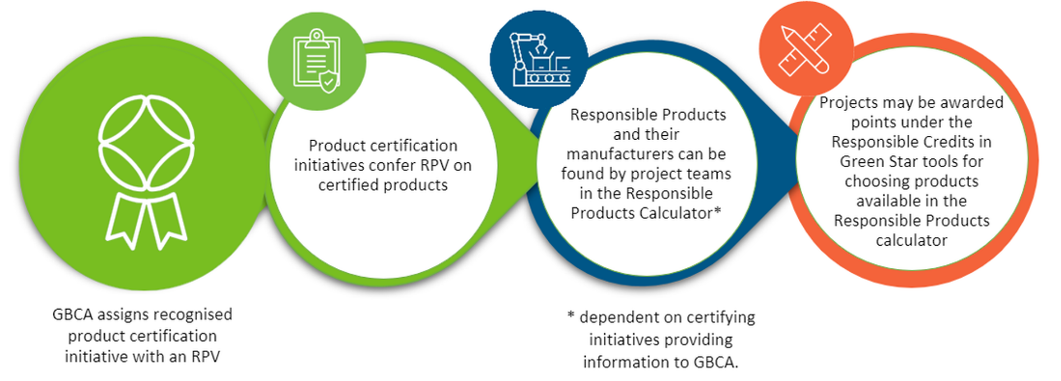
As under the GBCA, for NZGBC Green Star rating, products certified by a recognised independent third-party certification scheme (‘the initiatives’) may be assigned a Responsible Product Value. This contributes to credits in a project’s submission.
ACRS Sustainable Constructional Steel Scheme, the SCS Scheme, is recognised by the GBCA and now the NZGBC, as best practice in responsible product sourcing.
As a recognised initiative, it confers Responsible Product Values (RPV) on certified products. Green Star project teams can receive recognition for the use of these products to unlock up to 9 of the available 13 Responsible Products credits towards the relevant materials-related Green Star rating.
All SCS Scheme-certified products (with any level of SCS certification) exceed “Best Practice” credits across all five Responsible Product categories (Responsible, Healthy, Positive, Circular, Leadership) – unlike other Schemes that may be limited to certain categories, or offer partial credits.
All levels of ACRS SCS scheme certification deliver more Green Star RPV credits than any other steel certification scheme currently available. When used in combination with other certified initiatives (covering non-steel products or systems), the SCS Scheme places your project in the strongest position to meet the relevant credit requirements and achieve compliance with Green Star Buildings certification.
You can see product certification initiatives recognised by the GBCA here.
“The inclusion of SCS certification under Green Star tools is one of many ways clarity and verified data around steel products’ ESG claims can help the industry.
New Zealand’s adoption of these tools is a great step to tackling embodied carbon and improving the impact of its built environment”
– Andrew Wheeler, Executive Director ACRS
How it's used for Green Star
To achieve a Green Star certification, a project is awarded points, based on performance across a range of categories. The total points determine the Green Star rating 15 or more points for 4 stars, 35 or more for 5, and 70 or more for 6 stars.
These points come from credit achievements, including for lower upfront and embodied carbon emissions, under the four areas of Responsible, Healthy, Resilient and Positive.
A project team considering ways in which their project can be eligible for Green Star points, might consider looking at the Responsible category, and specifically on Responsible Procurement. Responsible products are eligible for up to 13 credits, and can also indirectly contribute to credits under other categories such as Healthy and Positive.
For example, under Responsible Structure, 3 points can be earned if 50% of all structural components (by cost) meet an RPV of 10 or more.
A further 2 points can be gained if 10% of all products in the structure (by cost) meet an RPV of 15 or more OR if 80% meet an RPV of 10 or more.
As SCS-certified materials all have an RPV of 16 or higher, 100% of SCS product achieves the maximum number of credits available under Responsible Structure.
A total 5 points could be earned this way, and additionally 4 points could also be earned under Responsible Envelope, amounting to 9 points – 60% of the way to a 4-star rating through steel alone.